
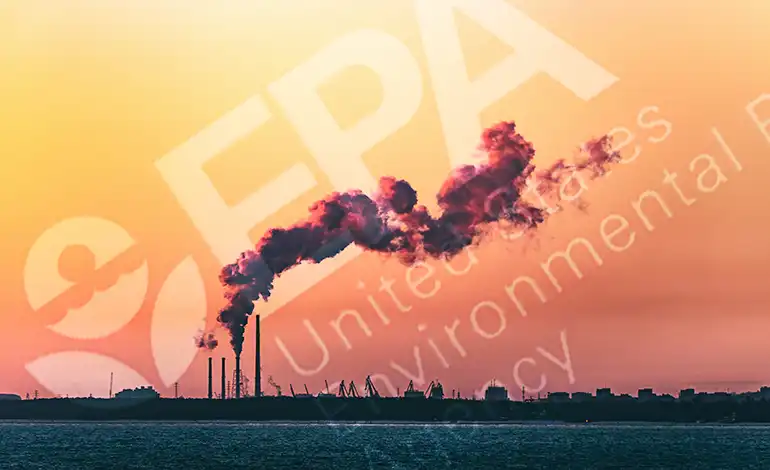
What About the EPA’s Endangerment Finding?
A Standoff? A Smackdown? “He Said She Said?”
The EPA’s C02 Endangerment Finding of 2009 is under the gun by President Trump’s current (2025) initiative, “Unleashing American Energy.” Here is a quick timeline of important executive orders issued over the past 15 years to help lay out the landscape for legal battles to come.
Obama Administration (2009-2017):
- On December 7, 2009, the EPA finalized its Endangerment Finding under the Clean Air Act section 202(a), stating that greenhouse gases (GHGs) in the atmosphere, including C02, represent an endangerment to public health and the environment for current and future generations.i The Finding was presented by officials to represent a consensus within the scientific community, justifying governmental action.
- Executive Order 13693 issued in 2015, instructed federal agencies to reduce their GHG emissions in data centers and physical buildings by 40% over 10 years, and mandated a gradual transition nationally to renewable energy sources aiming to reduce C02 levels in the earth’s entire atmosphere.
Trump Administration (2017-2021):
- Executive Order on Promoting Energy Independence and Economic Growth issued March 28, 2017, directed the Environmental Protection Agency (EPA) to review the Clean Power Plan in compliance with administration’s previous order of January 30, 2017 (Reducing Regulation and Controlling Regulatory Costs). While these orders continued to promote an official policy of clean air and water, it directed Attorney General Jeff Sessions to seek a stay of Clean Power Plan litigation.ii
Biden Administration (2021-2024):
- Executive Order 14008 issued in 2021 (Tackling the Climate Crisis) reversed Trump’s orders and re-established emissions reductions standards.
- Executive Order 14082 (Establishing the Justice40 Initiative) of 2022 went further, allocating 40% of federal climate funds to disadvantaged communities, and requiring the Council on Environmental Quality (CEQ) to create a Climate & Economic Justice Screening Tool to advance environmental justice. The Order also mandated a reduction of GHG emissions to 50-52% below 2005 levels by 2030, producing carbon pollution-free electricity by 2035, and achieving net-zero emissions by no later than 2050iii.
Trump Administration (current orders, January 2025 – April 2025):
- Unleashing American Energy (January 2025) summarily revoked previous orders addressing climate change and directed agencies to reconsider regulatory actions related to GHG emissionsiv. The Order also withdrew the U.S. from the Paris Climate Agreementv. This “Unleashing American Energy” order represents an official challenge to data upon which the 2009 Endangerment Finding and subsequent policies were based.
- Establishing the National Energy Dominance Council (February 2025) named the Secretary of the Interior as Chair of the Council, and the Secretary of Energy as Vice Chair. 15 Additional members representing various WH Agencies were named.
- Protecting American Energy from State Overreach (April 8, 2025) specifically challenges state laws and programs addressing climate change, GHG emissions, and other environmental, climate-related programsvi .
- Regulatory Relief for Certain Stationary Sources to Promote American Energy (April 8, 2025) grants a two-year exemption from the EPA’s Mercury and Air Toxics Standards (MATS) initially mandated in 2011, with numerous modifications through 2024 – citing the lack of commercially viable emissions-control technology necessary for meeting the MATS 2027 compliance deadline. This order asserts that enforcing MATS as written jeopardizes grid reliability, threatens national security, and harms the coal sector as well as the broader economy.
- Updating Permitting Technology for the 21st Century (April 15, 2025) directs agencies to streamline permitting processes for infrastructure projects related to the environment by leveraging modern technologies. The order requires the CEQ to establish an interagency Permitting Innovation Center by April 30, 2025, to design and test permitting software tools. By May 30, 2025, the CEQ, in coordination with permitting agencies and the National Energy Dominance Council, are required to issue a Permitting Technology Action Plan outlining data standards, software requirements, and a governance roadmap. Agencies must adopt and begin implementing the Plan’s standards and tools by July 15, 2025.
The Trump administration argues that his initiative will benefit American industry and manufacturing by stabilizing what had been a revolving regulatory landscape. Many saw the regulations as unnecessary and based on conflicting data regarding the effect of manmade C02 in the atmosphere. Challenges to the heavily subsidized green energy sector cannot be ignored, but those who banked on government subsidies are surely preparing to launch fierce resistance to Trump’s Executive Orders. As experts and scientists present their arguments, the debate will center on this question: “Do manmade GHGs such as C02 pose a threat – or endangerment to public health and the environment? If so, should the federal government intervene?”
Considering the obvious lack of consensus on this highly debated issue, the argument seems headed for a “he said, she said” fight for political control (or freedom from control). We know only this. Right now, it’s “Trump said.” We’ll see what the courts say in response. Any guesses?