The Great Mississippi Shell Game
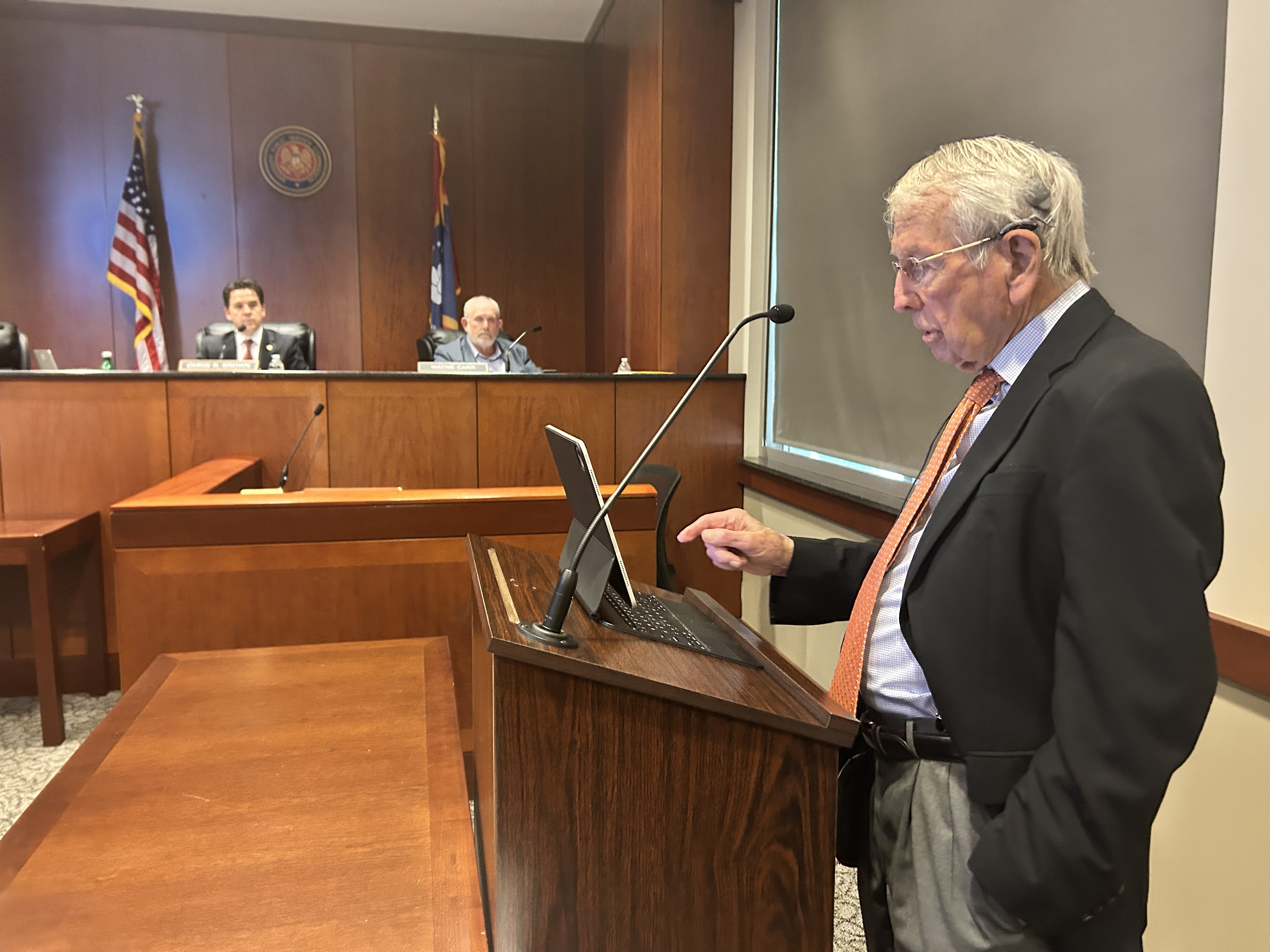
Note: The following is the transcript from Kelley Williams’ presentation at the Sept. 25 Public Service Commission’s Summit on Data Centers.
I’m glad to be here and I appreciate the opportunity to talk about being fooled. I don’t do this every day so I can’t wing it, but I want to be careful that what I tell you will stand up to cross-examination and spin and rebuttal. So I’m going to go slow and we’ll try to be precise and accurate.
I don’t mean to brag, but if being fooled were an Olympic sport, I’d at least get silver. I have been fooled a lot. It’s said that nothing is foolproof to a sufficiently talented fool. I’m sufficiently talented based on my experience, so I think I’m qualified to talk about being fooled. Mark Twain said, “It is easy to make people believe a lie, but hard to make them un-believe it.”
My talk is about lies and spin that fool us about the secret energy Amazon deal.
There’s a lot of spin and disinformation about the secret deal. Entergy conceived it and worked with the governor and the Mississippi Development Authority to put it together, according to Entergy. A compliant legislature then passed Senate Bill 2001 in a two-day special session. That 300-page bill set the stage for Amazon’s $10 billion, and now $16 billion, investment. It also set the stage for unlimited spending by Entergy for Amazon-related projects.
We’ve heard from some credentialed experts this morning. I’m not an expert, credentialed or otherwise, but I understand some of what they said, and I understand that electric rates are going up because demand for electricity is growing faster than reliable supply. That’s happening almost everywhere. Demand is going up due to artificial intelligence and data centers—the demand for electricity feeds and makes artificial intelligence possible.
Prices go up when demand grows faster than supply—that’s an iron law of economics and it works for all commodities. For most commodities, prices fall when supply catches up to demand, but the price for electricity never seems to fall. That may be because regulated monopolists produce electricity in their markets, and prices are protected.
Prices for commodities also go up when there are doubts about supply reliability. More windmills and solar projects create doubts about supply reliability because they only produce electricity when the wind is blowing and the sun is shining—they’re not reliable. You might think that unreliable power would be cheaper, but you might be wrong about that.
So we have a perfect storm: fast-growing demand, slow-growing, less reliable, more expensive supply.
The electric grid connects producers and users of electricity. We are part of the MISO grid, along with 14 other states. Entergy shares electricity with other producers in the grid.
Here’s a question: When Amazon’s data centers start up and Entergy runs short of electricity on a hot summer day, it may buy very expensive emergency power on the grid. The question is, who pays for it? Will Amazon, whose demand is greater and who will create most of the demand, or do all customers—residential customers and small businesses—pay for it?
I don’t think we know the answer to that question because it is secret. It is electricity for residential customers and small businesses that they use every day. That is not emergency electricity. Electricity will also be more expensive if small customers pay for part of Entergy’s spending for Amazon.
I want to explain this so small customers will understand why their rates are going up. It’s simple. If Entergy spends more for plants and infrastructure for Amazon than Amazon pays under the secret deal, small customers pay the difference. Their rates go up. That’s in addition to increases due to inflation, tighter supply-demand balance, higher fuel costs, and other factors unrelated to the Amazon deal.
Some small customers are concerned. Others may not know what’s coming or they may trust the governor or the legislature to do the right thing. They may be surprised and angry when their rates soar.
I write about this, and so does Wyatt Emmerich, a professional journalist—a real journalist—who is here today, and the local news media, like Magnolia Tribune, Jackson Jambalaya, WLBT—run these stories, waking people up and performing a public service. If enough people wake up, there may be a preference cascade. That happens when enough people realize they have a common problem and can do something about it.
Rates will go up for about a million people in Entergy’s monopoly service area due to the Amazon project. That may be enough people.
I represent Bigger Pie. We try to wake people up. We are in the sound-the-alarm business like Paul Revere. Do you remember: “Listen, my children, and you shall hear of the midnight ride of Paul Revere”? His message was simple—the British are coming. His job was to wake people up before it was too late.
Our message is simple: higher rates are coming. The explanation is simple, but it is hard to believe. It’s hard to believe that the governor and the legislature would make small customers pay more to benefit one of the largest companies in the world and one of the country’s largest utilities.
So it is understandable when politicians say Amazon’s investment is good for Mississippi—but it’s not understandable when they say Entergy’s uncontrolled spending for Amazon is good when it will cause higher rates for over a million Mississippians.
Entergy says rates are going up, but that they’ll go up less under the secret deal. That’s like British loyalists running behind Paul Revere saying, “But there aren’t as many British coming as there might have been.” It sounds like spin.
Spin is a nice word for a lie. Mark Twain was right: it is easy to make people believe lies and spin, especially about the benefits of economic development projects.
You remember the Kemper County plant? It was an economic development project based on lies and spin about the experimental technology that didn’t work. Millions in taxpayer dollars and billions in shareholder value disappeared, and rates for Mississippi Power small customers went up 17%. Promoters justify spending on economic development projects on the premise that they will create permanent jobs—some do, some don’t. The $6 billion project created no promised permanent jobs. None.
So spending on economic development projects is a risky game. I call Entergy’s spending on the secret deal the “Great Mississippi Shell Game.” The barker, the shell man, is the legislature. It made the “pea” – the PSC – disappear. The barker is Entergy. He taps prosperity and progress and says Amazon’s huge power needs are urgent. That introduced rushed spending without PSC oversight, supposedly necessary to meet Amazon’s schedule.
He says Entergy’s guaranteed 10% profit on spending for projects before they work – and even if they never work – is somehow good for small customers. He says the game goes faster if the PSC can’t blow the whistle on unneeded overspending, no-bid contracts, or spending that is not useful or not proven.
Contractors and suppliers are the shills in the crowd. They whisper that data centers mean more jobs and less brain drain and will transform Mississippi into a miniature Silicon Valley.
The marks—the suckers—are the small customers who will pay for Entergy’s spending for Amazon that Amazon won’t pay for. How much is that? We don’t know. Secret deal.
The question is not the benefit of Amazon’s huge investments, or which negotiators got the best deal for Amazon. It may be the best deal they’ve ever gotten. If the secret deal makes Entergy’s customers pay more for utility spending on plants and infrastructure for Amazon’s data centers, then small customers will bear the brunt—just as customers in other states pay for their utility spending for their data centers. That’s on our legislators, not Amazon. They negotiated the deal. If Entergy’s out-of-control spending costs customers more, that’s also on our legislators. Were they misled? Yeah.
So what type of new small customer rates exist in other states with data centers? Virginia has over 500 data centers—more than any other state. Its residential rates have gone up 29% since 2020, with the advent of these hyperscale data centers. Rates are expected to double by 2030. Georgia is a similar case. Their rates have increased 27%, and you have a similar story in other states with data centers.
Why does this happen? Because utilities spend more for the data centers than data center owners will pay. Small customers pay the difference. Little guys subsidize giant corporations. This is called the “data center effect.” And that happens in other states that have not sidelined their PSCs or allowed their utilities uncontrolled spending.
What’s going to happen here? The secret deal sidelines the PSC and gives Entergy a blank check.
Previous speakers spoke about the benefits of regulated utilities. There are some benefits. It’d be nice if we had them. Entergy says its rates are among the lowest in the country. It implies that it won’t hurt if they go up—they’ll still be low relative to the rest of the country. But they’re not low relative to the income of almost half of Entergy’s residential customers. Those customers are among the poorest in the country. Their energy burden—the percent of their household income spend on energy—is the highest in the country. It will get higher. That’s embarrassing.
We should be embarrassed by a deal that makes Mississippi poorer, subsidizing big companies.
So what happens if you get cheated in a rigged game? You probably wouldn’t play again. If you are a small Entergy customer, you don’t have a choice. Entergy has the only electricity game in town in its 45 county monopoly service area.
So what can we do? There are over a million of us. We have collective clout. We can demand to know how much our rates are going up and how much of the increase is due to Entergy’s out-of-control spending for Amazon. We can demand that legislators restore the PSC’s historic authority to regulate utility spending. We can demand that legislators create a watchdog agency to represent us. Other states have consumer advocates for small customers; Mississippi’s small customers need one too.
So I’ll leave you with a few questions.
How big a deal is sidelining the PSC? It’s a huge deal. No other state has done it. You can’t have a regulated monopoly without regulators—you just have a monopoly. One that enriches shareholders at the expense of small customers. Entergy is protected as a regulated monopoly, but it wants the profits of an unregulated business. That’s not right. That’s what antitrust laws are for.
How can we avoid future ratepayer disasters? We can’t if we have no regulator and customers have no watchdog. We’re seeing another ratepayer disaster like Kemper play out in real time.
Does the Public Utilities Staff represent ratepayers? No. It was created to advise the PSC. It is supposed to balance the interests of utilities and ratepayers and give objective advice on utility spending and the effects on small customers. It doesn’t. It favors utilities. It gets input from utility engineers, lawyers, consultants, and experts—but gets no input from customers. We have no engineer, lawyer, expert, or other advocate to speak for us. The system is rigged against small customers. It is an injustice to keep small customers at the mercy of the present system.
Why is Mississippi like this? Are we slow learners, or what? Other states are requiring data centers to reimburse costs—utilities and infrastructure costs—rather than shifting them to residential customers. Indiana, Ohio, Georgia—no other state is doing what we are doing.
How do we mitigate damage to small customers from the secret deal? How do we know what to believe about the secret deal? You can examine the actual language that sidelines the PSC if you can find it in the 300-page bill and compare it to what you’ve heard and decide for yourself. We have a handout that will help with that and identifies the fine print—subsections of Section 22 of the bill—that sidelines the PSC, removes competitive bidding for construction contracts, removes caps on rate increases, and allows Entergy to add padded costs plus interest to customer rates before projects are complete, before they work and even if they never work.
It also allows Entergy to sign large customized agreements with terms set without reference to existing laws, locked in place for the life of the agreement, and immune to PSC modification—even if costs increase more than provided in the agreements. The whole deal is a secret—a trade secret, a political secret.
So here’s the takeaway: Entergy is a cost-plus-10% monopoly. Unlike non-monopoly businesses, which want their costs low to make a profit, Entergy wants its costs high so it can make a profit. The higher its costs, the more it makes and the greater its market value for shareholders. The higher its costs for big economic development projects, the higher the costs for small customers.
So Entergy promotes big economic development projects and pays lip service to small customers. Section 22 of Senate Bill 2001 says that the Amazon project is more important than regulating Entergy on behalf of customers, that it is more important in Mississippi for Entergy to be in the economic development business than to provide service to small customers. Reliable, affordable service? It’s losing priority to profits.
The market value of Entergy Corp has increased over 50% in the last 18 months, based largely on $33 billion of planned spending by its subsidiaries, including in Mississippi, for data center projects over the next five years.
Small customers rely on you to regulate Entergy’s spending and ensure it provides affordable, reliable electricity for all its customers, but Senate Bill 2001 removes your authority to do that in Mississippi. Entergy Mississippi and their political allies see the PSC as a pest to be squashed. It seems they see small customers as acceptable collateral damage in Mississippi’s Brave New Data Center World.