
Whistling Past Mudberg
In 1950, the Corps of Engineers told Congress that when the Mississippi River is high, part of it flows down the Atchafalaya River at the juncture of an old river bed — and that it would all flow that way by 1975. That would be a catastrophe for people, cities, and plants at and below Baton Rouge on the Mississippi and in the Atchafalaya basin and for the nation’s river commerce and national security.
Congress told the Corps to stop it. That’s like telling the Corps to stop gravity — it makes water flow downhill. The Atchafalaya is steeply downhill to the Gulf. The main channel to the Gulf by New Orleans is almost flat because of a thousand years of siltation.
The Corps said the best we can do is delay it. And built the Old River Control Complex (ORCC) to block the old river channel, keep most of the Mississippi in the main channel, and send part of it down the Atchafalaya.
The ORCC has defied gravity so far. But the record-high 2011 flood and the record-long floods of 2019-21 show that gravity is gaining. That something has changed to increase course change risk in a big flood. In 2017, LSU’s Dr. Xu identified what has changed.
A bottleneck of sand and sediments has formed below the ORCC. It slows the river’s flow and makes floods inside the levees higher near the bottleneck and longer from Baton Rouge to above Greenville. Dr. Xu said a high enough flood will cause the course change.
The bottleneck is just below the ORCC about 40 river miles above Baton Rouge. I call it Mudberg.
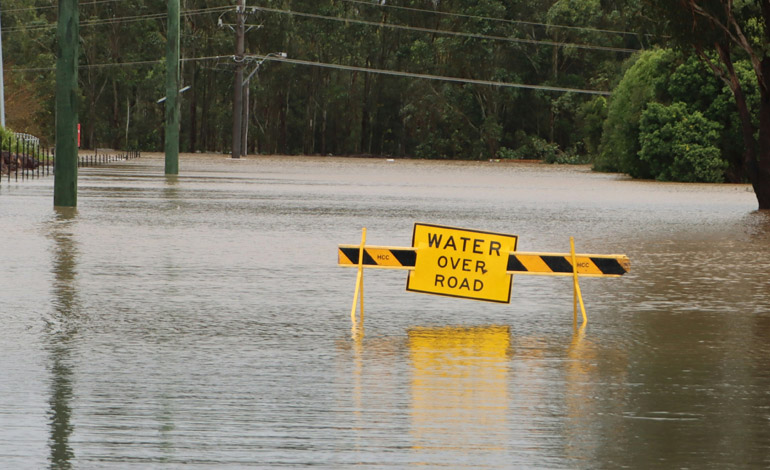
There are over a million acres inside the levees. The land is mostly privately owned. It has always flooded seasonally. Its unique hardwood ecosystem has adapted to the seasonal flood environment and has flourished. Mudberg’s long floods have changed the environment and are destroying the ecosystem.
The Corps could make floods shorter if it dredged Mudberg. It doesn’t and has no plans to do so according to the Commanding General of Corps flood control projects. Why?
Maybe it’s because the Corps caused Mudberg to form when it changed the operation of ORCC in 1990 to favor a small hydroelectric plant over its mission to delay the course change. That change caused sediments to fall out in the main channel and form Mudberg. Dredging Mudberg will cost billions. Not dredging it could cost trillions.
Maybe it’s awkward for the Corps to seek funding to fix a problem it caused — even though the generals whose decisions in the 1980s created the problem are long gone. Some of the politicians may still be around.
Maybe it’s because there’s not enough funding for both of the Corps’ main missions: flood control and navigation maintenance. Barge companies, elevators, hundreds of plants, and thousands of people whose jobs depend on river commerce are better advocates for congressional funding for navigation than a few hundred flood victims are for flood control. So the Corps gets millions to dredge a low-water barge canal around Mudberg every year. Squeakier wheel. Today’s problem.
Course change is a much bigger problem. But it’s tomorrow’s problem. The Corps is a bureaucracy. It defaults to: “I’ll think about that tomorrow.” Future course change victims on the lower Mississippi and in the Atchafalaya basin are blissfully ignorant about what’s coming.
Some flood victims in the batture (and in backwater flood areas outside the levees) may be ignorant too. I was. I didn’t know why floods beginning in 2016 caused permanent damage to my land. It’s inside the levees about 20 river miles above Mudberg.
I had seen floods come and go over 40 years. They were mostly predictable and beneficial. None caused permanent damage to land and habitat. But the 2016 winter flood was different. It left huge sand dunes in woods and fields and on farm roads for the first time. Some remember that flood because it closed the deer season early. I remember it because it was the first flood to cause irreversible damage to land and natural habitat.
It was followed by destructive floods in 2017 and 2018. And by record-long floods 2019-21. They destroyed much of the batture’s unique bottomland hardwood ecosystem. I testified four times 2016-17 to the Mississippi River Commission to ask why the flooding had changed. The Generals said it was more rain.
In 2018, I learned what had changed from Dr. Xu’s paper warning about a course change. I learned about Mudberg. I learned that it was growing and that the bottleneck was getting more constrictive. And that this had caused the Mississippi’s flood discharges to the Gulf to decrease 23% from 2008 to 2015. And that this is the main reason floods are longer and cause permanent damage — not a little more rain.
Mudberg was also the reason the 2011 flood was 7.2’ higher at the ORCC than earlier floods with similar flow. And why it almost overtopped the Morganza Spillway before the Corps could open it to protect Baton Rouge and New Orleans.
The Corps predicts floods will get even higher. And that they will overtop levees. This means they will overtop the ORCC and cause the course change. Dredging Mudberg will reduce that risk. But the big course-changing flood could come at any time.
Dredging Mudberg could cost a hundred billion — and delay a course change that costs trillions. It may delay the course change long enough for the Corps to develop and promote a project to manage it. A managed course change will be controversial and politically challenging. It will be disruptive. There will be fierce not-in-my-backyard opposition. But it will be far less destructive.
Bureaucrats in the Corps and politicians will likely default to: “I’ll think about that tomorrow.” Not thinking about it today is whistling past the course change graveyard.
Tomorrow may be a day late and a trillion short.
Kelley Williams
Chair, Bigger Pie Forum
June 15, 2026